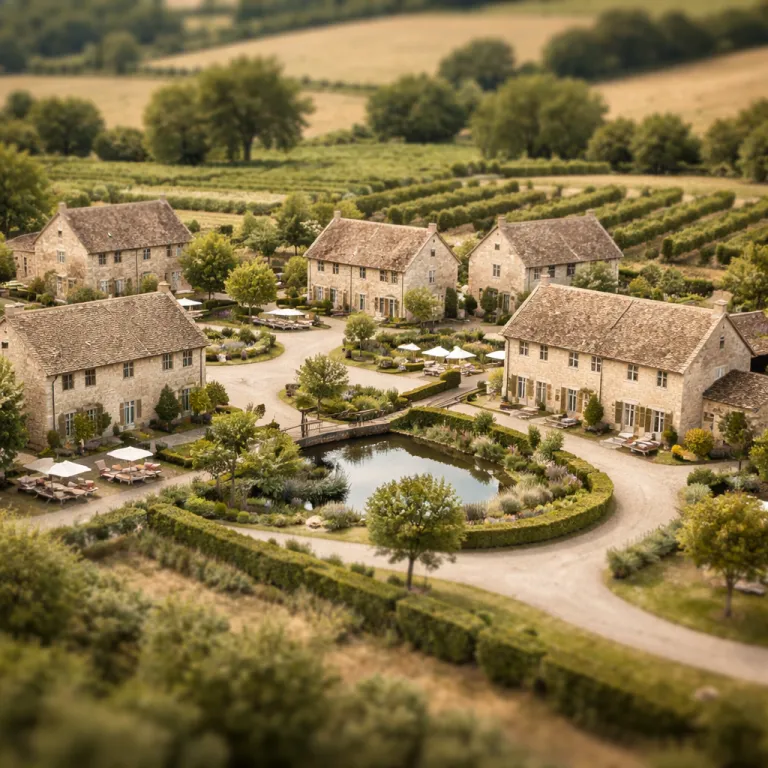
Why the most interesting country houses stay off the radar
Undiscovered luxury country house hotels rarely shout for attention online. Their owners tend to prioritise the garden, the library and the long view over any marketing campaign that might push the hotel into every feed. That restraint is exactly why these hotels feel like a private world rather than another content backdrop.
Many of these luxury hotels sit in historic estates where the business model is built around preservation, not volume, so the focus is on the right guests rather than the most guests. When you check availability at places such as Gravetye Manor in West Sussex or Whatley Manor in the Cotswolds, you are often looking at a handful of rooms per night, each one different in design and outlook. The result is a stay that feels curated rather than programmed, with availability managed to protect the atmosphere of the house and its grounds.
Marketing teams in these hotels are usually small, sometimes just one person who also oversees events, partnerships and the hotel spa. That means fewer social media campaigns and more attention on the restaurant, the wine list and the way the light falls through floor to ceiling windows in a favourite room. For the guest, the absence of constant promotion translates into a quieter, more considered luxury where the best rooms are selected for character, not for how they photograph.
There is also a structural reason why many of the best hotels remain under the algorithmic surface. Large hotels resorts groups optimise for search, invest in paid campaigns and flood the internet with city breaks offers, while independent country houses rely on repeat guests and word of mouth. When you search for a luxury hotel in wine country or for a resort spa in south Tyrol, the same twenty properties appear, even though smaller hotels with better food and more interesting design may sit just a few kilometres away.
For executives extending business trips into leisure, this creates both a challenge and an opportunity. You must work harder to check availability and compare rooms night by night, but you are rewarded with a stay that feels genuinely private and unrepeatable. The perfect place is often the one that does not rank on the first page, yet offers a better view, a quieter spa and a more thoughtful room than many of the supposed best hotels.
Gravetye Manor, for example, is an Elizabethan country house hotel surrounded by gardens of national importance, and it illustrates how a property can be quietly world class. The hotel has a Michelin star restaurant, a serious wine programme and rooms where original beams meet contemporary comfort, yet it does not behave like a typical luxury resort. Guests come for the walled garden, the sense of history and the way the staff remember how you take your coffee, not for a branded seasons resort style experience.
Whatley Manor in Wiltshire follows a similar path, with landscaped grounds, a strong hotel spa and a focus on wellness retreats rather than loud campaigns about being one of the hotels best in the region. Here, availability is managed to keep the spa calm, the restaurant focused and the rooms feeling like private retreats rather than inventory to be filled. These are not family friendly theme parks, yet families who value space, gardens and good food often find them more welcoming than larger resort spa complexes.
At Coworth Park Hotel near Ascot, Georgian architecture meets an eco spa and a contemporary equestrian design language that feels rooted in the landscape. The property is part of a larger group of luxury hotels, yet it behaves more like an independent estate, with ceiling windows framing the parkland and rooms that open directly onto private terraces. Guests who check availability here are often surprised to find that the most rewarding room is not the largest suite, but the one with the best view of the polo fields at night.
Lainston House near Winchester and Ansty Hall in Warwickshire round out a quiet constellation of historic hotels that prioritise heritage over hype. Both sit in extensive grounds, with Lainston House offering more than 25 hectares of parkland and Ansty Hall framed by classic English gardens that change character with the seasons. These properties show how undiscovered luxury country house hotels can offer a richer stay than many heavily marketed hotels resorts, simply by letting the house, the food and the landscape speak for themselves.
The algorithm problem and how to look beyond the obvious
Search engines and social platforms are structurally biased towards scale, which is why the same luxury hotel names appear in every list of country escapes. Algorithms reward content volume, advertising spend and constant posting, none of which are priorities for owners of quiet estates who care more about the orchard than the engagement rate. The result is a distorted picture where undiscovered luxury country house hotels barely register, even when they offer the best rooms and the most interesting spa experiences.
When you search for hotels best suited to a quick escape from London, you will usually see the same polished resorts and heavily photographed manor houses. Yet a more nuanced guide to luxury country hotels near London beyond the obvious choices will point you towards places where the design is more personal, the food more rooted in local producers and the stay less scripted. These are the hotels where you still need to call to check availability, where a human being will talk you through which room has the quietest view or the most generous floor to ceiling windows.
Listicles and ranking sites tend to flatten nuance, treating every hotel as a set of comparable features rather than as a lived experience. A resort spa with a dramatic pool and a long treatment menu will often outrank a smaller hotel spa where the therapist has worked with the same family for decades and knows half the guests by name. For travellers who care about atmosphere, that smaller spa may be the perfect place to arrive after a week of city breaks and meetings.
There is also a geographic bias in how hotels are surfaced. Properties in south Africa or south Tyrol that sit within large hotels resorts portfolios are pushed aggressively, while independent wine country estates with only a few rooms remain almost invisible online. Yet those quieter hotels often deliver a more convincing sense of place, with private tastings, garden tours and rooms that open directly onto vineyards or orchards.
To work around this, you need to change how you search and how you check each hotel. Instead of relying on the first page of results, look for local newspapers, regional magazines and specialist travel agents who focus on country houses and luxury hotels. These sources often highlight estates where the best room is not the most expensive, but the one that catches the evening light or offers a long view over the gardens at night.
Networks such as Small Luxury Hotels of the World and Preferred Hotels & Resorts play a quiet but important role here. Preferred Hotels & Resorts, for example, has been actively adding independent properties that combine strong design with a clear sense of place, which helps surface hotels that would otherwise be buried. When a country house joins such a network, it gains booking infrastructure and global visibility without losing the independent spirit that makes the stay feel private and unrepeatable.
Yet even within these networks, the most characterful estates often underplay their strengths. A hotel with a Michelin star restaurant may mention the accolade only once on its website, preferring to talk about the kitchen garden and the relationship with local farmers. For the guest, this means that the best hotels for serious food often require more research, more cross checking of reviews and more attention to the details that do not fit neatly into a star rating.
Executives planning to extend a business trip into a countryside stay should treat the booking process as part of the experience. Call the hotel directly, ask which rooms night patterns are quietest, and request photos of specific room layouts rather than relying on generic categories. This is how you find the room with the unexpected ceiling windows over the bath, or the private terrace that catches the first light, details that rarely appear in standard booking engines.
Undiscovered luxury country house hotels reward this extra effort with a different quality of rest. You arrive not at a seasons resort clone, but at a house where the design reflects the owner’s taste, the spa feels like a retreat rather than a facility and the staff treat your stay as a relationship rather than a transaction. In a market saturated with lookalike luxury hotels, that independent spirit is the rarest amenity.
Quiet estates that raise the bar without chasing stars
Some properties prove that you can be both under the radar and uncompromising in standards. These are the undiscovered luxury country house hotels that serious travellers talk about in hushed tones, the places that rarely appear in mass market rankings yet shape how insiders define the best hotels. They are not trying to be the next big resort, but they often end up setting the benchmark for what a modern country house stay can be.
Take Gravetye Manor, where the historic gardens are as central to the experience as any suite or spa treatment. The hotel’s Michelin star restaurant draws directly from those gardens, with the chef walking the paths each morning to plan the menu around what is at its peak. Guests who check availability here are often more interested in the timing of the seasons than in the latest promotion, choosing their rooms night by night to coincide with the orchard blossom or the height of the herbaceous borders.
Whatley Manor offers a different but equally compelling model, with a strong wellness focus and a spa that feels integrated into the landscape rather than bolted on. The design language is calm and contemporary, with floor to ceiling windows framing the gardens and quiet corners for reading between treatments. This is a hotel spa where the best room might be the one closest to the hydrotherapy pool, allowing you to slip from bed to water in a few steps.
Further afield, the logic holds in Mediterranean estates and wine country villas that operate more like private homes than like hotels resorts. A refined guide to Greek country house stays, for example, will highlight villas in Crete where the architecture, the food and the rhythm of the day are shaped by local life rather than by international trends. These properties may not carry the label of a luxury hotel, yet they deliver a level of privacy and authenticity that many branded resorts struggle to match.
In south Tyrol, a handful of family run hotels combine sharp contemporary design with deep roots in the landscape. Here, rooms are often lined with local wood, ceiling windows frame the Dolomites and the spa draws on alpine traditions rather than generic resort spa menus. Guests who check availability at these hotels are usually looking for a stay that balances serious hiking with serious food, not a seasons resort style entertainment programme.
South Africa offers another layer of nuance, especially in wine country estates that sit between hotel and private home. Some of the most rewarding stays happen in properties with only a few rooms, where the owner pours the wines at dinner and the view from your room stretches over working vineyards. These are not family friendly theme parks, but they welcome multi generational groups who value space, quiet and the ability to shape each night around their own rhythm.
What unites these diverse properties is an independent spirit that resists standardisation. They may work with networks such as Preferred Hotels & Resorts for distribution and booking support, yet they keep control over design decisions, food philosophy and how they manage availability. For the guest, this means that each stay feels specific, from the way the light moves across the room to the way the staff remember your favourite wine.
Countryhousestay.com was built to map precisely this kind of estate, curating undiscovered luxury country house hotels that share a commitment to character over conformity. Our guide to what the walled garden tells you about a country house hotel is essentially a manifesto for this approach, arguing that the garden often reveals more about the property’s values than any lobby design. When you choose a hotel through this lens, you start to see that the perfect place is rarely the loudest one, but the house that has quietly evolved over decades.
For business leisure travellers, these estates offer a different way to extend a work trip. Instead of defaulting to a city breaks package at a generic luxury hotel, you can spend two or three nights in a house where the design is personal, the spa intimate and the food shaped by the surrounding fields. The ROI on rest, focus and genuine pleasure is usually far higher than on any points driven stay in a predictable urban tower.
How to actually find and book these independent houses
Finding undiscovered luxury country house hotels requires a different toolkit from booking a mainstream resort. You are not just comparing rates and room sizes, but reading between the lines of how a hotel talks about its gardens, its food and its sense of place. The process takes longer, yet for travellers who care about design, privacy and authenticity, that extra effort defines the quality of the stay.
Start by ignoring the first wave of search results and moving directly to regional sources. Local magazines, country life publications and specialist agents often highlight hotels where the best room is not the one with the largest television, but the one with the most interesting view or the quietest corner of the house. When you find a promising property, call or email to check availability rather than relying solely on an online booking engine.
During that conversation, pay attention to how the team describes their rooms and their approach to service. A hotel that talks about which rooms night patterns are calmest, which suites catch the morning light and which have private terraces overlooking the gardens is usually thinking about your stay in a more holistic way. Ask specifically about floor to ceiling or ceiling windows, about the proximity to the spa and about any family friendly options if you are travelling with children.
Next, interrogate the food offering with the same seriousness you would apply to a restaurant reservation. Ask whether the hotel has a Michelin star or works closely with local producers, and whether the menu changes with the seasons or remains static. In many of the best hotels, the kitchen garden, the orchard and the surrounding farms shape the menu far more than any corporate concept, and this is where undiscovered luxury country house hotels quietly outclass many larger hotels resorts.
Networks such as Preferred Hotels & Resorts and Small Luxury Hotels of the World can be useful filters, especially when you are looking at unfamiliar regions. These organisations vet properties for quality and character, which means that a hotel listed there has already cleared a certain bar in terms of service, design and amenities. Yet within those lists, the most interesting estates are often the ones with fewer rooms, a more personal spa and a stronger connection to local culture.
When it comes to booking, resist the temptation to treat every stay as a transaction to be optimised. Instead of chasing the lowest rate, focus on securing the right room for the way you travel, whether that means a quiet corner suite for late night calls or a ground floor room that opens directly into the garden. Ask the hotel to hold a specific room if possible, and confirm details such as spa access, dining times and any family friendly arrangements in writing.
For executives blending work and leisure, this level of detail pays off in clarity and calm. You arrive knowing that your room has a proper desk, that the Wi Fi reaches the terrace and that the spa can accommodate a late evening treatment after your last call. The stay becomes a seamless extension of your working life, yet with a different backdrop of trees, fields and long views instead of glass and steel.
Ultimately, the most rewarding undiscovered luxury country house hotels are those that feel like they could not exist anywhere else. They are shaped by their gardens, their history and their people, not by a brand manual or a design trend. When you find a house like that and make it your favourite escape, you understand why the future of luxury lies not in bigger resorts, but in quieter, more intentional places that algorithms will never fully grasp.
Key figures shaping luxury country house stays
- There are around 100 recognised luxury country house hotels in the United Kingdom, a relatively small number that explains why availability can be tight at peak times and why advance booking is essential for weekend stays (source: Historic House Hotels data).
- The average room rate per night in high quality UK country houses is approximately 300 GBP, which positions these hotels between mainstream four star properties and large scale luxury resorts, while reflecting the cost of maintaining historic buildings and extensive grounds (source: Cotswold Insider analysis).
- Roughly 20 % of leading UK country house hotels operate with a Michelin starred restaurant, a figure that underlines how central serious food has become to the definition of modern rural luxury and to the appeal of extended stays for business leisure travellers (source: PoB Hotels collection data).