From meiji era prison to hoshinoya nara heritage retreat
On 25 June, Hoshino Resorts opens Hoshinoya Nara inside the former Nara Prison, turning a once severe complex into a measured expression of Japanese luxury. The Hoshinoya Nara Prison luxury hotel 2026 project occupies a historic red brick property on the edge of central Nara, where the original prison walls, towers and radial wings now frame a calm, almost cloistered stay. For travelers used to country houses and manors, this site in Japan offers a different kind of estate experience, one where architectural heritage and memory sit as prominently as any landscape garden.
The original Nara Prison was commissioned by the Meiji government as one of the Five Great Prisons, and it remains the only survivor of that ambitious penal reform programme. Architect Keijiro Yamashita’s japan architectural plan set five red brick wings radiating from a central hall, a layout that once enabled strict surveillance and will now guide guests through a sequence of courtyards, corridors and cell suite clusters. Classified as a National Important Cultural Property, the property has been restored under the supervision of the Ministry of Justice, with Hoshino Resorts committing to keep the prison’s historic character legible while introducing the full comfort expected of a contemporary luxury hotel.
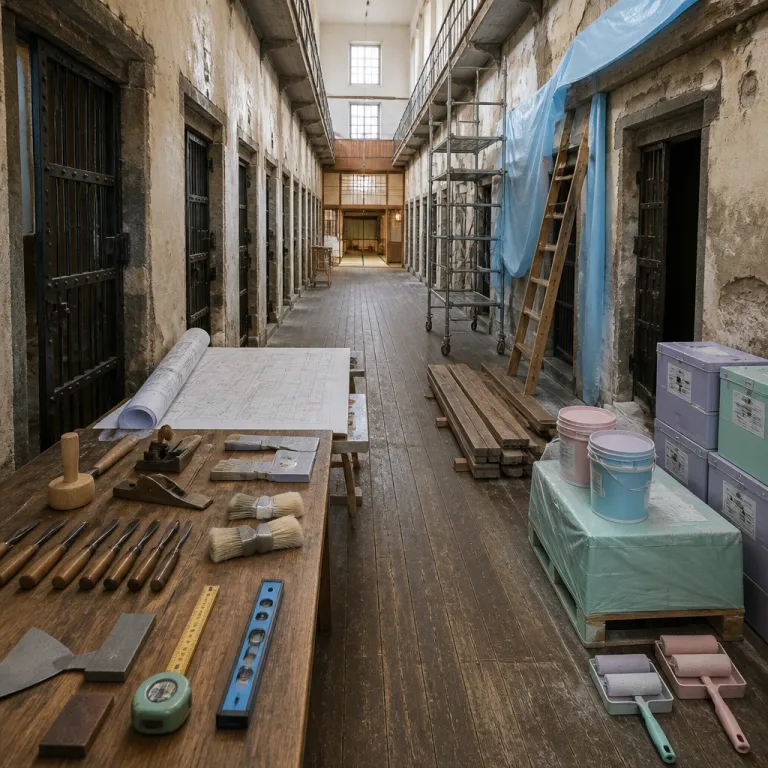
Azuma Architect & Associates, led by Rie Azuma, has treated the Nara site almost like a country estate conversion, retaining the brick walls and iron columns while inserting timber, shoji and soft textiles to create a warm, modern counterpoint. The largest cell suite combines ten former cells into one generous room, while other suites will feature original arched windows and views across the internal yards that once served as exercise grounds. For readers who track adaptive reuse, the Hoshinoya Nara Prison luxury hotel 2026 opening marks a new benchmark in how a prison hoshinoya project can respect cultural property status yet still function as a refined hotel where you genuinely want to stay.
Design, daily life and the new prison museum at nara station’s edge
The design challenge here was clear ; how do you make a prison comfortable without erasing its past, and how do you signal luxury without trivialising the lives once contained within these brick walls ? Hoshino Resorts and Azuma Architect & Associates answer with a layered approach to contemporary design, allowing guests to read the building’s history in every corridor while softening the experience through light, texture and service. Where a European country house might lean on panelled libraries and drawing rooms, this japan architectural landmark uses its red brick corridors and radial plan as the primary storytelling devices.
Public areas sit in the former administration blocks, where the museum invites both overnight guests and day visitors to engage with the prison museum narrative during opening hours. Exhibition rooms explain how the Meiji era penal reforms reshaped justice in Japan, why Nara Prison became a model facility, and how the Ministry of Justice partnered with Hoshino Resorts to secure the building’s future as a cultural property. One official FAQ now frames the project succinctly ; “What is Hoshinoya Nara Prison?” and “When does Hoshinoya Nara Prison open?” and “Where is Hoshinoya Nara Prison located?” — these three questions and answers are already shaping how travelers search for the hotel.
Guest wings are quieter, with each cell suite accessed from long, gently lit corridors that still follow the original prison geometry. Materials do most of the work ; red brick and exposed steel are balanced by cedar, tatami and soft fabrics, while the contemporary design of furniture keeps lines clean and low. For those planning a june luxury escape, pricing will sit in line with other Hoshinoya properties, and reservations for the Hoshinoya Nara Prison luxury hotel 2026 opening are handled directly through Hoshino Resorts, much like the advance booking patterns we see at major heritage estates highlighted in our guide to summer openings worth booking now.
What heritage country houses can learn from japan’s most ambitious prison conversion
For readers who usually gravitate toward English manors or Tuscan villas, the Hoshinoya Nara Prison luxury hotel 2026 project offers a different template for heritage hospitality. Instead of manicured lawns and follies, the drama lies in the architectural heritage of a meiji era prison, where red brick, watchtowers and brick walls become the equivalent of a walled garden or a long drive. The lesson for European country houses is sharp ; when the building itself carries such weight, the role of the hotel is to frame, not overwrite, that story.
Hoshino Resorts has long treated each property as a narrative, but here the stakes are higher because Nara Prison is both a luxury hotel and a living museum. The on site prison museum, open to the public by day, ensures that the building’s past remains visible even as guests enjoy Japanese French dining and onsen style bathing in the evenings. This dual identity echoes other heritage conversions we track at countryhousestay.com, from Irish coastal estates to Italian palazzi, and it aligns closely with the philosophy behind our feature on heritage hotels where the building is the story.
Practicalities matter for solo explorers ; Nara Station sits a short taxi ride away, putting the hotel within easy reach of Kyoto and Osaka while keeping the property quietly detached from city noise. Expect a stay that feels closer to a country house retreat than an urban resort, with slow breakfasts, considered service and time to read in former administrative rooms that now function as lounges. If you are weighing Hoshinoya Nara against a classic manor in the south of Ireland, our guide to elegant coastal country houses offers a useful counterpoint, but few estates worldwide can match the way this prison hoshinoya conversion turns a once punitive site into a calm, culturally resonant place to stay.