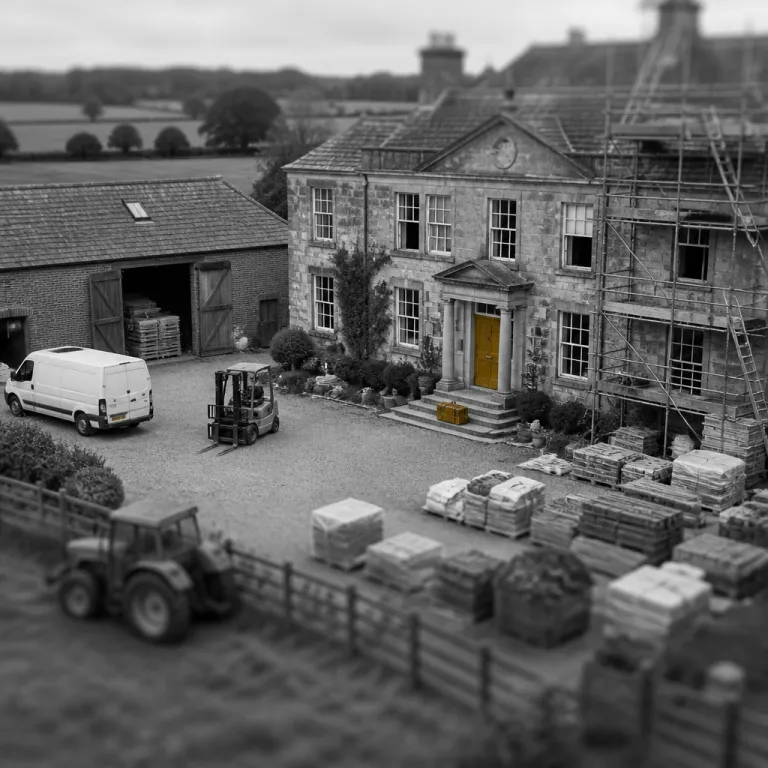
The new economics of the country estate hotel
Across the UK, the shift from private manor to country house hotel now describes an economic pivot rather than a design fad. Historic estates that once relied on tenant farmers and seasonal shoots are turning to hospitality as agricultural margins shrink and maintenance on vast heritage properties rises relentlessly. For many families, developing an estate hotel through adaptive reuse is no longer an optional diversification project but the only realistic route to long term heritage preservation.
Running a working estate means servicing roofs on multiple buildings, restoring stone bridges, and managing thousands of tonnes of embodied carbon locked into old walls. Inheritance tax, staff costs, and the price of maintaining listed buildings have pushed owners to treat their land as serious real estate, not just ancestral scenery. That is why hotel conversion projects, from reusing former dower houses as boutique inns to full scale transformations of main halls, now sit alongside farming in the estate business plan.
Travel platforms have noticed that guests actively seek out these historic building conversions rather than purpose built roadside hotels. Industry commentators report that a significant share of new openings in the hospitality market now involve reusing existing structures, signalling that both one off country house hotels and larger conversion projects are reshaping expectations of modern luxury. For you as a guest, this means the “room type” is no longer just a category on a booking engine but a chapter in a centuries long story of land, labour, and preservation.
From plough to pillow: how adaptive reuse reshapes working estates
When a working estate opens its gates to paying guests, the built environment must serve tractors at dawn and champagne trays at dusk. The most successful country house hotel conversions in the UK keep the farmyard alive while threading hospitality quietly through existing buildings. You might check into a hotel where the former grain store now holds a bar, yet the neighbouring barn still houses livestock.
This is adaptive reuse at its most nuanced, where every building conversion respects the original purpose while enabling a new guest experience. Estate owners weigh whether to convert office buildings in the stable block into suites, or to keep them as administration hubs for land management projects and local employment. The best conversion projects treat the estate as a living organism, not a frozen museum, so that heritage properties continue to generate income without losing their working soul.
Across the Atlantic, the Inn at Warner Hall in Virginia — a restored 18th century plantation house associated with George Washington’s maternal family — illustrates how this tension plays out when a manor house becomes an inn. The property reopened in the early 2000s after a meticulous restoration that balanced heritage preservation with modern hospitality needs such as fire safety and accessible circulation. One of the owners has described the process as “learning to hide twenty-first century services inside eighteenth-century walls,” a phrase that captures the reality for grand houses worldwide, from elegant upstate New York wedding venues in historic country houses to Scottish sporting lodges now marketed as luxury hotels.
Planning, regulation and the quiet drama of conversion
Behind every serene country house bedroom lies a planning saga that most guests never see. Listed building consent, fire regulations, and accessibility standards collide with fragile plasterwork and centuries old timber, turning each estate hotel redevelopment into a negotiation between past and present. Local authorities, conservation officers, and hotel operators must agree how far conversions can go before they compromise authenticity.
Installing lifts in narrow stairwells, threading sprinkler systems through oak beams, and adding commercial kitchens to stone basements all test the limits of adaptive design. Estate owners often prefer reuse projects that tuck modern services into secondary buildings, preserving principal rooms for drawing room drinks and library lounges. Yet even these outbuildings, from former office buildings to carriage houses, demand careful interior design so that modern luxury feels integrated rather than imposed.
Industry analysis suggesting that historic building hotel conversions account for a growing proportion of new openings reflects a wider shift in the hospitality market towards reusing existing buildings instead of commissioning entirely purpose built resorts. In the UK, for example, trade bodies have reported that conversion projects made up roughly half of new hotel rooms added in recent years, aligning with global concerns about embodied carbon in construction and the environmental cost of demolishing sound structures. For guests, it means that a stay in a converted stable or gate lodge is not only charming but also part of a broader movement in the built environment towards more responsible preservation.
Guest experience: character, comfort and the risk of over-renovation
For travellers, the appeal of a stay on a historic estate lies in its layered character. You are not just booking a hotel room; you are stepping into a landscape where tractors still cross the drive and sheep graze within sight of the terrace. The best hotels lean into this, allowing the working estate to remain visible rather than hiding it behind manicured lawns and anonymous spa wings.
Inside, thoughtful interior design can reconcile creaking staircases with underfloor heating and powerful showers, creating modern luxury without erasing patina. Guests increasingly value a guest experience where original stone floors, uneven corridors, and inherited furniture sit comfortably alongside discreet technology and well lit bathrooms. When hotel operators respect the grain of old buildings, conversions feel like a natural evolution rather than a themed set.
The failure mode is over-renovation, where heritage properties are stripped of their quirks and refitted to resemble generic hotels. In such cases, building conversions may technically succeed, but the hospitality soul of the place evaporates, leaving only a polished shell. If you care about authenticity, look for signs that the estate’s daily life still hums in the background, from muddy boots in the porch to gardeners carrying crates of vegetables towards an outdoor sleeping terrace designed for summer nights under the stars.
Commerce, community and the future of estate hospitality
When a landowning family shifts from tenant farmer rents to guest revenue, the social contract of the estate changes. Staff who once worked only in agriculture may now split their time between lambing sheds and hospitality roles, while local suppliers gain new opportunities to serve the hotel market. A well run country estate hotel project can become a regional employer, stabilising rural economies that have struggled with declining farm incomes. In the UK, for example, industry surveys suggest that many rural hotels now achieve year round occupancy close to 70%, supporting permanent jobs rather than only seasonal work.
Yet this transition raises questions about access, identity, and who the estate ultimately serves. Some communities worry that hotel development will prioritise affluent visitors over long standing residents, especially when media coverage focuses solely on luxury and ignores the working landscape. Responsible hotel operators counter this by opening parkland trails, supporting village events, and ensuring that reuse projects include spaces where locals feel welcome, from cafés in former estate offices to farm shops in converted buildings.
Developers in other sectors have shown how adaptive reuse can balance commercial returns with social value. In Los Angeles, for example, a former Ramada Inn was converted into affordable apartments, while in Portland a multifamily building was transformed into a hotel, and in Waco, Texas, a historic temple was restored as Hotel 1928. These widely reported projects illustrate how “adaptive reuse” and “hotel conversions” can address both economic shifts and preservation goals. For country house estates, the challenge now is to apply similar creativity so that their second lives as hotels support not only owners and guests but also the wider rural community.
FAQ
What is adaptive reuse in the context of country house hotels ?
Adaptive reuse means repurposing existing buildings, such as manor houses or stable blocks, for new functions like hotels or apartments while retaining their historic fabric. On country estates, this often involves turning heritage properties into hospitality spaces rather than constructing entirely new, purpose built resorts. The aim is to balance heritage preservation, guest comfort, and financial viability within the existing built environment.
Why are so many historic estates converting into hotels now ?
Rising maintenance costs, inheritance tax, and lower agricultural margins have made traditional estate income streams less reliable. Converting parts of an estate into hotels or other hospitality properties creates new revenue while supporting the preservation of historic buildings. This shift reflects a broader real estate trend where hotel conversions and other reuse projects are seen as more sustainable than new construction.
How does staying in a converted estate differ from a modern hotel ?
A stay in a converted estate usually offers stronger connections to landscape, history, and local community than a standard urban hotel. Guests experience original architecture, working farm activity, and interior design that responds to the quirks of old buildings rather than a uniform layout. Comfort levels can match modern luxury standards, but the atmosphere is shaped by centuries of previous uses.
Are adaptive reuse hotels better for the environment ?
Reusing existing buildings typically conserves embodied carbon because it avoids the emissions associated with demolition and new construction. Adaptive reuse also encourages more efficient use of land and infrastructure within the existing built environment. While each project varies, many conservation specialists view sensitive conversions as a more sustainable option than building entirely new hotels.
What should I look for when booking a stay on a historic estate ?
Check how transparently the estate explains its history, current land use, and approach to preservation. Look for signs that the guest experience respects both the heritage of the property and the needs of the local community, such as local hiring, open access to some grounds, and visible working estate activity. Reviews that mention thoughtful design, authentic character, and well integrated modern comforts are strong indicators of a successful conversion.